Pet-Friendly Flowers in Singapore: Safe Bouquets for Cats & Dogs | Expert Florist Guide
Pet-Friendly Flowers in Singapore: The Complete Guide for Cat and Dog Owners (2026)
Which bouquet flowers are safe for your pets, which will make them ill, and which Singapore house plants are quietly dangerous — everything you need to know, backed by ASPCA toxicology data.
Singapore has one of the highest rates of cat and dog ownership in Southeast Asia, and flowers are one of the most commonly gifted items in the country. The two facts combine in one very specific way: every week, someone in Singapore receives a beautiful bouquet, puts it in a vase, and has no idea whether the arrangement they just placed on the coffee table is safe for the animals sharing their home.
This guide is the most comprehensive, accurate reference on pet-friendly flowers in Singapore that we know of. We have cross-referenced every flower with the ASPCA Animal Poison Control Center's verified toxic and non-toxic plant database — the gold standard for pet toxicology — and applied that information specifically to the flowers and house plants most commonly found in Singapore homes and florist arrangements.
Whether you are a pet owner receiving flowers, a gift-buyer ordering for someone with cats or dogs, or a Singapore resident trying to build a safer indoor plant collection, this guide covers everything you need to know.
In this guide
- Quick reference: safe and unsafe at a glance
- Flowers that are safe for cats and dogs in Singapore
- Flowers to avoid — Singapore's most common toxic blooms
- The grey zone — flowers that need context
- Singapore house plants: safe vs toxic
- Cats vs dogs: why the risk is different
- Symptoms of flower poisoning in pets
- Practical tips for pet owners who love flowers
- Ordering pet-friendly flowers from The Florté
Quick Reference: Safe and Unsafe Flowers at a Glance
If you are in a hurry, this table covers the flowers you are most likely to encounter in Singapore florist arrangements. Full details for each flower are in the sections below.
| Flower | Cats | Dogs | Severity if ingested |
|---|---|---|---|
| Roses | Safe | Safe | Non-toxic (thorns are a physical hazard) |
| Sunflowers | Safe | Safe | Non-toxic |
| Orchids (Phalaenopsis, Dendrobium) | Safe | Safe | Non-toxic |
| Gerbera daisies | Safe | Safe | Non-toxic |
| Snapdragons | Safe | Safe | Non-toxic |
| Zinnias | Safe | Safe | Non-toxic |
| Celosia | Safe | Safe | Non-toxic |
| Eustoma / Lisianthus | Safe | Safe | Non-toxic |
| Statice | Safe | Safe | Non-toxic |
| Wax flower | Safe | Safe | Non-toxic |
| Alstroemeria | Caution | Safe | Mildly toxic to cats only — GI upset |
| Carnations | Caution | Caution | Mildly toxic — GI upset, mild dermatitis |
| Baby's breath | Caution | Caution | Mildly toxic — GI upset |
| Hydrangeas | Toxic | Toxic | Cyanogenic glycosides — vomiting, diarrhoea |
| Chrysanthemums | Toxic | Toxic | Pyrethrins — vomiting, diarrhoea, dermatitis |
| Tulips | Toxic | Toxic | Tulipalin A & B — GI upset, drooling, depression |
| Daffodils | Toxic | Toxic | Lycorine alkaloids — vomiting, arrhythmia |
| Lilies (true lilies — Lilium spp.) | LETHAL to cats | Toxic to dogs | Cats: kidney failure and death. Dogs: GI upset |
| Peonies | Toxic | Toxic | Paeonol — vomiting, diarrhoea |
| Calla lily | Toxic | Toxic | Calcium oxalate crystals — oral burning, vomiting |
Flowers That Are Safe for Cats and Dogs in Singapore
The following flowers are classified as non-toxic to cats and dogs by the ASPCA. They are also regularly available in Singapore florist arrangements, which makes them genuinely practical choices for pet owners — not just theoretical suggestions.
Roses (Rosa spp.)
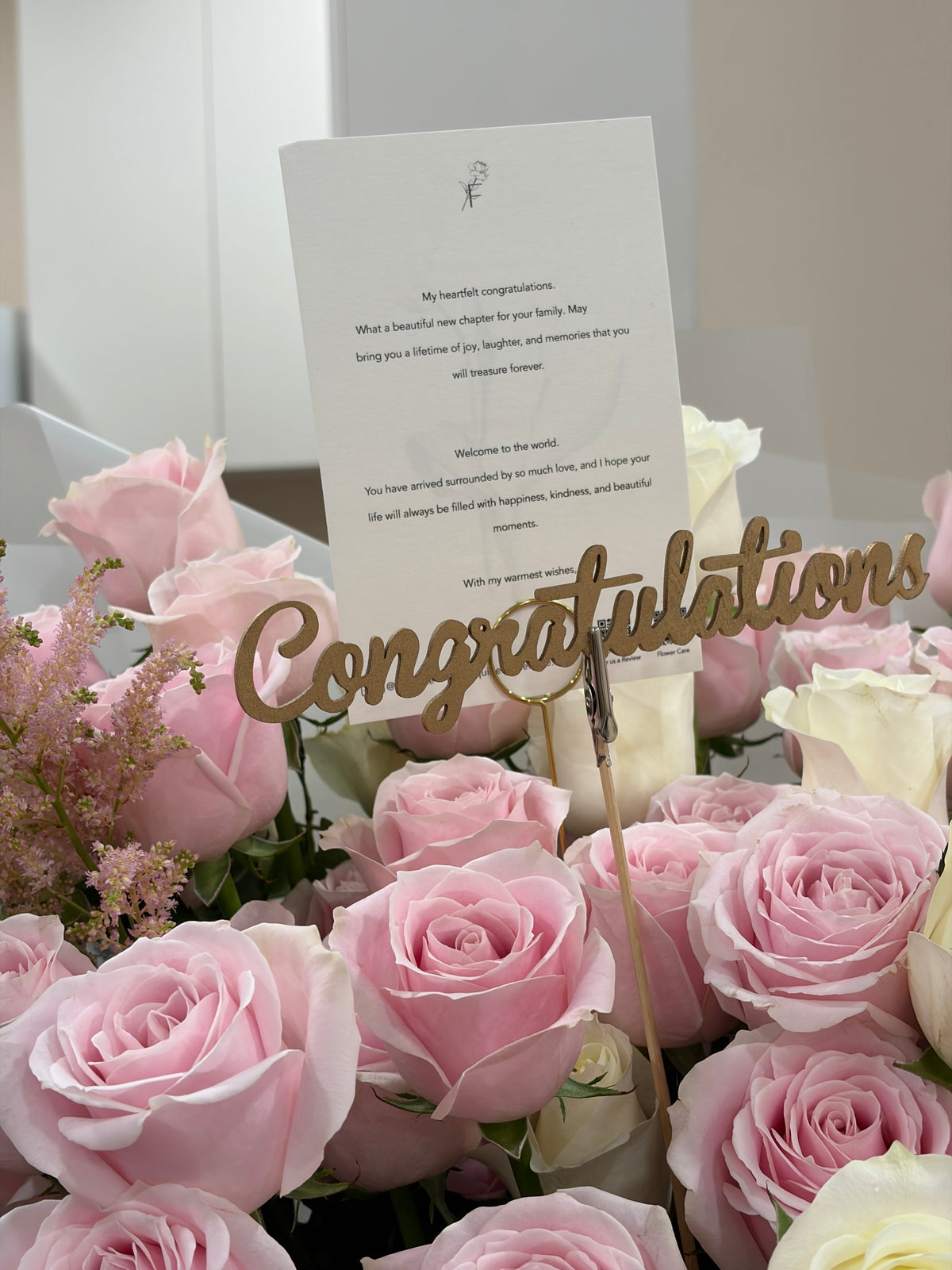
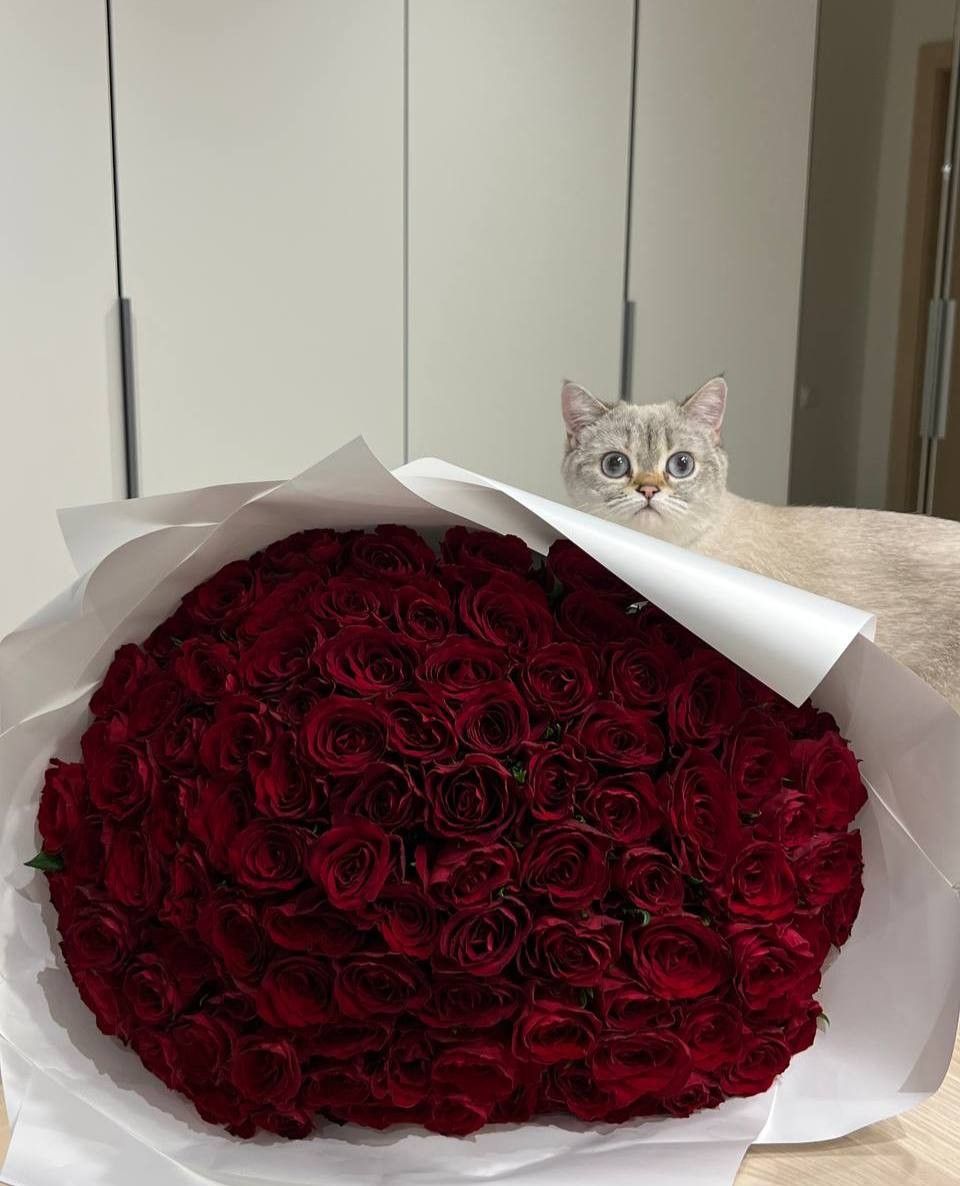
Safe for cats & dogsRoses are the most popular cut flower in Singapore and, happily, one of the safest for pets. They are classified as non-toxic to both cats and dogs by the ASPCA. If a pet chews on rose petals, the most likely outcome is mild stomach upset from eating something that is not part of their natural diet — nothing more serious.
The one genuine hazard is thorns. Rose stems carry sharp thorns that can scratch a curious cat's face or paw, or injure a dog's mouth if they chew on the stem directly. Remove thorns from any stem that pets could access, or ensure bouquets are placed well out of reach.
Verdict: The safest common flower for pet households. Suitable for any arrangement in a home with cats or dogs.
Sunflowers (Helianthus annuus)
Safe for cats & dogsSunflowers are completely non-toxic to both cats and dogs and are one of the most cheerful and pet-safe choices available from Singapore florists. Their bold yellow heads make them a popular birthday and get-well-soon flower, and there is no concern about a curious pet nibbling on a fallen petal. Available year-round in Singapore.
Verdict: Fully safe. An excellent choice for pet households, particularly for sunny, joyful occasions.
Orchids — Phalaenopsis and Dendrobium (Phalaenopsis spp., Dendrobium spp.)
Safe for cats & dogsThis is excellent news for Singapore, where orchids are a cultural emblem and widely used in both cut arrangements and as potted house plants. Phalaenopsis (moth orchids) and Dendrobium orchids — the two varieties most commonly found in Singapore homes and florist arrangements — are classified as non-toxic to cats and dogs by the ASPCA.
Singapore's national flower, the Vanda Miss Joaquim, is also an orchid. Orchids broadly are among the most pet-safe flowers available, making them an outstanding choice for households with animals. If your cat is particularly curious, a tip: dusting orchid leaves with a pinch of cinnamon or cayenne pepper acts as a natural deterrent without harming the plant or the cat.
Verdict: Safe and ideal for Singapore pet households. One of the best flowers to have as both a cut arrangement and a house plant.
Gerbera Daisies (Gerbera jamesonii)
Safe for cats & dogsGerbera daisies are vivid, long-lasting and widely available in Singapore florist arrangements. They are classified as non-toxic to both cats and dogs. Their bold colours — available in red, orange, yellow, pink and white — make them a popular choice in birthday and celebration arrangements, and you do not need to worry if a pet investigates a fallen bloom.
Verdict: Fully safe. Widely available in Singapore and an excellent choice for colourful, pet-safe bouquets.
Snapdragons (Antirrhinum majus)
Safe for cats & dogsSnapdragons are a florist favourite for adding height and texture to arrangements, available in a wide range of colours from soft pastels to vivid jewel tones. They are completely non-toxic to both cats and dogs, making them a safe and beautiful structural component for any pet-friendly bouquet. Available in Singapore during cooler seasonal import periods.
Verdict: Fully safe. A good choice for adding vertical interest to a pet-safe arrangement.
Eustoma / Lisianthus (Eustoma grandiflorum)
Safe for cats & dogsLisianthus — known as eustoma in Singapore flower markets — is a popular filler and feature flower that resembles a rose or peony in its ruffled bloom form. It is non-toxic to both cats and dogs and is used widely in Singapore wedding arrangements, birthday bouquets and everyday arrangements. One of the most beautiful and pet-safe flowers available locally.
Verdict: Fully safe. A beautiful, rose-like flower that is an ideal peony or rose substitute in pet-friendly arrangements.
Celosia (Celosia plumosa, Celosia globosa)
Safe for cats & dogsCelosia — the feathery or cockscomb-shaped flowers available in vivid pinks, oranges and reds — are fully non-toxic to cats and dogs. They are used as textural accents in contemporary Singapore florist arrangements and add striking visual interest without any safety concern for pets.
Verdict: Fully safe. A distinctive textural addition to pet-friendly arrangements.
Zinnias (Zinnia spp.)
Safe for cats & dogsZinnias are cheerful, hardy flowers available in nearly every colour and are fully non-toxic to both cats and dogs. While less commonly found in Singapore florist arrangements than in Western markets, they are used by independent florists as a seasonal accent and are an excellent choice when available.
Verdict: Fully safe.
Statice (Limonium sinuatum)
Safe for cats & dogsStatice is a common filler flower in Singapore arrangements, used for its texture and long-lasting dried form. Small clusters of papery flowers in purple, pink, yellow and white, it is non-toxic to cats and dogs and retains its appearance even when dried.
Verdict: Fully safe. Also suitable as a dried flower accent in pet households.
Wax Flower (Chamelaucium uncinatum)
Safe for cats & dogsWax flower is an Australian native used widely in Singapore florist arrangements as a delicate filler with tiny waxy blooms. It is non-toxic to both cats and dogs and its lightly fragrant, airy sprigs add a soft, natural quality to bouquets without any safety risk for pets.
Verdict: Fully safe. Commonly used in The Florté arrangements.
Flowers to Avoid — Singapore's Most Common Toxic Blooms
True Lilies (Lilium spp.) — Easter Lily, Tiger Lily, Stargazer, Oriental Lily, Asiatic Lily
LETHAL to cats · Toxic to dogsThis is the single most important flower safety fact for Singapore cat owners. All members of the Lilium genus are acutely, potentially fatally toxic to cats. This includes the commonly sold Easter lily, Tiger lily, Stargazer lily, Oriental lily, Asiatic lily and all other true lilies used in cut flower arrangements.
Uniquely, every part of the lily is dangerous to cats — not just the petals, but the leaves, stems, and even the pollen. A cat that brushes past a lily arrangement and gets pollen on its fur, then grooms itself, has ingested lily toxin. Even drinking the water from a vase containing lilies can cause kidney failure.
The mechanism of toxicity is not fully understood, but lilies cause rapid onset of acute kidney injury in cats. Without immediate veterinary intervention — typically within 18–24 hours of exposure — kidney failure is often fatal. Even small exposures, such as a few petals or pollen contact, can be enough.
For dogs: True lilies cause gastrointestinal upset (vomiting, diarrhoea, lethargy) but are not associated with the same catastrophic kidney failure seen in cats. They are still toxic and veterinary attention is warranted if a dog ingests them, but the risk is substantially lower.
Calla lilies (Zantedeschia aethiopica) and Peace lilies (Spathiphyllum) — both extremely common in Singapore — are not true lilies but carry their own toxicity (see house plants section). Day lilies (Hemerocallis spp.) are also highly toxic to cats despite not being in the Lilium genus.
Action: If you have cats, do not bring any arrangement containing lilies into your home. If your cat has been exposed to lilies — even just via pollen — contact a vet immediately. Do not wait for symptoms to appear.
Hydrangeas (Hydrangea macrophylla)
Toxic to cats & dogsHydrangeas are among the most popular flowers in Singapore — used extensively in premium bouquets, wedding arrangements and bloom boxes for their lush, full appearance. They are unfortunately toxic to both cats and dogs. Hydrangeas contain cyanogenic glycosides, which the body metabolises into hydrogen cyanide after ingestion.
Symptoms of hydrangea ingestion include vomiting, diarrhoea, lethargy and, in larger quantities, more serious effects. All parts of the plant are toxic, with the flowers and leaves carrying the highest concentration of the active compounds.
Action: Keep hydrangea arrangements out of reach of pets and remove any fallen petals promptly. If your pet has eaten any part of a hydrangea, contact your vet.
Tulips (Tulipa spp.)
Toxic to cats & dogsTulips are highly seasonal in Singapore — they appear in florist arrangements in spring (typically March to May) and are imported from the Netherlands. They contain Tulipalin A and Tulipalin B, toxic compounds concentrated most heavily in the bulb, but also present in the stem and petals of cut flowers.
Ingestion causes drooling, gastrointestinal upset, depression and lethargy in both cats and dogs. Larger ingestions — particularly of the bulb — can cause more serious effects. In Singapore, this is most relevant with cut tulip bouquets rather than garden bulbs, but caution is still warranted.
Action: Do not leave tulip bouquets accessible to pets. Mother's Day is the peak season for tulip arrangements in Singapore — be especially careful during this period.
Chrysanthemums / Mums (Chrysanthemum spp.)
Toxic to cats & dogsChrysanthemums are deeply culturally significant in Singapore — white chrysanthemums are used in Chinese funeral rites and coloured varieties appear widely in CNY and festive arrangements. They are toxic to both cats and dogs, containing pyrethrins (the same compounds used in some insecticides) along with other irritants.
Signs of chrysanthemum poisoning include vomiting, diarrhoea, excessive drooling, loss of coordination and skin irritation (dermatitis) from contact with the sap. The entire plant is toxic, including the leaves, stems and flowers.
Action: Avoid having chrysanthemums in a home with cats or dogs. If your pet has ingested any part of a chrysanthemum, contact your vet.
Peonies (Paeonia spp.)
Toxic to cats & dogsPeonies are among the most beloved flowers in Singapore — their lush, full blooms are a staple of premium bouquets, Mother's Day arrangements and wedding florals. They are toxic to both cats and dogs. The active compound is paeonol, found throughout the plant but concentrated in the bark. Ingestion causes vomiting and diarrhoea.
Peonies are available in Singapore primarily from April to June during their Northern Hemisphere growing season. They are particularly popular during Mother's Day — May 10 in 2026 — which is worth bearing in mind for households with pets.
Action: Keep peony arrangements out of reach of pets. Ensure fallen petals are removed promptly as they are just as toxic as the intact flower.
Daffodils (Narcissus spp.)
Toxic to cats & dogsDaffodils contain lycorine and other alkaloids throughout the entire plant, with the highest concentration in the bulb. Ingestion causes vomiting, diarrhoea, abdominal pain, drooling and, in more significant ingestions, cardiac arrhythmias. Even the water in a vase containing daffodils can cause illness if a pet drinks it.
Daffodils are less common in Singapore than in European markets but do appear as imported cut flowers in spring. If you receive an arrangement containing them, treat with the same caution as tulips.
Action: Keep daffodils away from pets and do not allow pets access to vase water from daffodil arrangements.
The Grey Zone — Flowers That Need Context
The following flowers occupy the middle ground — they are officially classified as toxic by the ASPCA but cause only mild symptoms in most cases. Understanding the nuance matters here because these flowers are extremely common in Singapore arrangements and the risk level is meaningfully different from that of lilies or hydrangeas.
Carnations (Dianthus caryophyllus)
Mildly toxic to cats & dogsCarnations are one of the most widely used flowers in Singapore — long-lasting, available in every colour, and a staple of birthday, Mother's Day and everyday arrangements. The ASPCA classifies them as toxic to both cats and dogs, but with an important qualifier: the clinical signs are described as "mild gastrointestinal signs and mild dermatitis."
Carnations contain triterpenoid saponins, which irritate the digestive tract if ingested and can cause contact dermatitis if the sap contacts the skin. Ingestion typically causes vomiting and diarrhoea in cats and dogs. The symptoms are usually self-limiting and resolve without treatment in most cases. This is categorically different from lily toxicity — a cat that eats a carnation petal is unlikely to suffer serious harm; a cat that eats lily pollen may die.
That said, the ASPCA's classification is clear: carnations are toxic. The practical recommendation is to keep them out of reach rather than treating them as fully safe, particularly if you have a cat that is prone to chewing on plants.
Verdict: Keep out of reach — particularly for cats. If your pet ingests carnations, monitor for vomiting and contact your vet if symptoms persist or worsen. Not in the same danger category as lilies, hydrangeas or tulips.
Alstroemeria — Peruvian Lily (Alstroemeria spp.)
Mildly toxic to cats · Generally safe for dogsAlstroemeria — sometimes called Peruvian lily — is a popular filler flower in Singapore arrangements, valued for its long vase life and attractive speckled petals. It is not a true lily (Lilium spp.) and does not cause the kidney failure associated with true lilies. However, it can cause mild gastrointestinal upset in cats if ingested.
For dogs, alstroemeria is generally considered to present a low risk. For cats, keep it out of reach as a precaution, and if you have a very curious cat, consider substituting it with eustoma (lisianthus), which has a similar aesthetic and is fully non-toxic.
Verdict: Proceed with caution for cats. Keep out of reach; not an emergency if a small amount is ingested, but monitor and contact your vet if symptoms appear.
Baby's Breath (Gypsophila paniculata)
Mildly toxic to cats & dogsBaby's breath is used in almost every mixed bouquet in Singapore as a soft, cloud-like filler. Despite its delicate appearance, it is classified as mildly toxic to both cats and dogs, potentially causing vomiting and diarrhoea if ingested. The risk is generally low given that pets would need to eat a meaningful quantity for symptoms to appear, but it is worth knowing, particularly as baby's breath falls from bouquets easily and accumulates at floor level where dogs and cats can access it.
Verdict: Low-level concern, but worth requesting that your florist substitute baby's breath with statice or wax flower — both of which are fully non-toxic and offer a similar airy, textural effect.
Singapore House Plants: The Pet Safety Picture
Cut flowers in bouquets are a temporary presence in most homes. House plants are permanent fixtures — and several of the most popular and fashionable house plants in Singapore are toxic to pets. This section covers the plants most commonly found in Singapore HDB flats, condominiums and landed homes.
⚠ Toxic — avoid in pet households
- Monstera deliciosa (Swiss Cheese Plant) — calcium oxalate crystals; oral burning, vomiting in cats and dogs
- Pothos / Devil's Ivy (Epipremnum aureum) — calcium oxalates; oral irritation, vomiting
- Peace Lily (Spathiphyllum) — calcium oxalates; oral burning, drooling, vomiting in cats and dogs; distinct from true lilies but still harmful
- Snake Plant / Sansevieria — saponins; vomiting, diarrhoea, nausea in cats and dogs
- Philodendron — calcium oxalates; oral irritation, drooling, vomiting
- Dracaena — saponins; vomiting, dilated pupils in cats
- ZZ Plant (Zamioculcas) — calcium oxalates; mild to moderate irritation
- Anthurium — calcium oxalates; oral burning, drooling, vomiting
- Dieffenbachia (Dumb Cane) — calcium oxalates; severe oral irritation, difficulty swallowing
- Sago Palm (Cycas revoluta) — cycasin; potentially fatal liver failure in dogs; extremely dangerous
- Bird of Paradise (Strelitzia reginae, the orange-flowered variety) — mildly toxic
✓ Safe — good choices for pet households
- Spider Plant (Chlorophytum comosum) — non-toxic to cats and dogs; widely available in Singapore
- Orchids (Phalaenopsis, Dendrobium) — non-toxic; ideal Singapore choice
- Boston Fern (Nephrolepis exaltata) — non-toxic to cats and dogs
- Calathea / Prayer Plant — non-toxic; great for Singapore's humidity
- Parlour Palm (Chamaedorea elegans) — non-toxic; good indoor plant for Singapore light conditions
- African Violet (Saintpaulia) — non-toxic; produces flowers year-round
- Peperomia (all varieties) — non-toxic; very easy to care for
- Haworthia — non-toxic succulent; tolerates Singapore indoor light
- Bird of Paradise (Strelitzia nicolai, the white-flowered variety) — non-toxic
- Bamboo Palm (Areca Palm / Dypsis lutescens) — non-toxic and thrives in Singapore
Cats vs Dogs: Why the Risk Is Different
The most important distinction in pet flower safety is not between safe and toxic flowers generally — it is between cats and dogs specifically.
Cats are uniquely vulnerable to true lilies. The mechanism by which Lilium species cause fatal kidney failure in cats is not replicated in dogs. A dog that eats a lily may feel unwell for a day or two. A cat that ingests even a small amount of lily pollen can develop irreversible acute kidney injury within 24–72 hours if not treated. This asymmetry of risk is often not communicated clearly in general guides.
There are several reasons cats face a different risk profile from flowers and plants generally:
- Grooming behaviour. Cats regularly lick their fur. A cat that rubs against a lily arrangement, gets pollen on its coat, and then grooms has ingested lily toxin without ever chewing the flower directly. Dogs do not groom themselves in the same way.
- Metabolic differences. Cats lack certain liver enzymes that allow other species to safely metabolise some plant compounds. This is why specific compounds — particularly the unknown nephrotoxin in Lilium species — cause catastrophic outcomes in cats that they do not in dogs.
- Inquisitive climbing behaviour. Cats access surfaces that dogs typically cannot — countertops, shelves, windowsills. A bouquet placed high up may be out of reach for a dog but accessible to a cat within minutes.
Dogs face their own specific risks. Grapes and raisins (not flowers, but commonly found in fruit hampers sent with flowers) can cause acute kidney failure in dogs. Macadamia nuts, similarly. Any delivered gift that includes fruit or nut add-ons should be checked before leaving where dogs can access it.
Symptoms of Flower or Plant Poisoning in Pets
Knowing what to watch for helps you act quickly. Symptoms vary by plant and by the amount ingested, but the following are the most common signs that a pet may have ingested something toxic:
Common early symptoms — contact your vet
- Vomiting (repeated or persisting)
- Diarrhoea
- Excessive drooling or salivating
- Pawing at the mouth
- Lethargy or unusual quietness
- Loss of appetite
- Skin redness or rash (dermatitis)
- Swollen mouth or tongue
Urgent symptoms — seek emergency vet care immediately
- Difficulty breathing or swallowing
- Seizures or tremors
- Loss of coordination
- Collapse or unresponsiveness
- Dilated pupils (especially in cats)
- Pale or yellow gums
- Known or suspected lily ingestion in a cat (do not wait for symptoms — act immediately)
In Singapore, emergency veterinary services include: Mount Pleasant Veterinary Centre (multiple 24-hour locations), The Animal Recovery Centre, Amber Veterinary Practice and others. Always call ahead before arriving at an emergency clinic if possible, and bring the name or a photo of the plant your pet may have ingested.
Practical Tips for Pet Owners Who Love Flowers
When you receive or buy flowers
- Identify every stem before putting the arrangement in water. Many bouquets contain multiple flower types and some filler elements are not immediately obvious. Baby's breath, eucalyptus (toxic to cats and dogs), ruscus (toxic) and ivy (toxic) are common greens used in Singapore arrangements that pet owners should watch for.
- Tell your florist you have pets. Any good Singapore florist — including The Florté — will happily substitute or avoid specific flowers if you let them know. Carnations can be replaced with gerberas; alstroemeria with lisianthus; baby's breath with statice or wax flower. You do not have to give up beautiful arrangements to keep your pets safe.
- Remove problematic stems rather than refusing the whole bouquet. If someone sends you an arrangement and it contains one lily stem among ten safe flowers, removing just the lily stems eliminates the primary risk. Check the vase water and change it after removing toxic stems.
- Place arrangements on high, stable surfaces. This is the most important practical step. A bouquet on a dining table, kitchen island or high shelf is beyond the reach of dogs. Cats are more challenging — a heavy stable vase on a surface where a cat jumping up would land away from the flowers (rather than into them) is the safest configuration.
- Clear fallen petals and leaves promptly. Flowers drop petals and leaves as they age. Check around bouquets daily and remove any material that has fallen to the floor.
When gifting to someone with pets
- Ask if the recipient has cats or dogs before ordering, or mention it when ordering. This single step prevents the vast majority of flower-related pet safety issues.
- When in doubt, choose roses, sunflowers, orchids or gerberas — all non-toxic and all commonly available in Singapore.
- Avoid arrangements that include eucalyptus, ruscus, ivy or other foliage without checking their safety status first. Greenery is often the overlooked element in pet safety conversations.
For your indoor plant collection
- The safest approach for pet households is to avoid any Araceae family plant — which includes Monstera, Pothos, Peace Lily, Philodendron, Anthurium and Dieffenbachia. This family accounts for the majority of household plant toxicity cases in cats and dogs in Singapore.
- Orchids, spider plants, calatheas, Boston ferns and parlour palms are all beautiful, non-toxic alternatives that thrive in Singapore's climate.
Ordering Pet-Friendly Flowers from The Florté
At The Florté, we are happy to accommodate pet-safe requests. When you place an order, simply include a note at checkout — "pet-friendly arrangement, please avoid lilies, hydrangeas and chrysanthemums" — and our florists will design your bouquet accordingly.
Our default pet-safe recommendations for bouquets and bloom boxes include roses, sunflowers, orchids, gerbera daisies, eustoma (lisianthus), snapdragons, celosia, statice and wax flower — all non-toxic to cats and dogs, and all regularly available from our Dempsey Hill studio.
We source our flowers fresh from Colombia, the Netherlands, Kenya, Asia and Ecuador. Every stem is conditioned at our studio before arrangement. For customised pet-friendly requests, please allow 2–3 working days advance notice and contact us directly at +65 9828 3370 or enquiries@theflorte.com.
Need a pet-safe flower arrangement in Singapore?
Tell us about your pets when you order and we'll design something beautiful — and completely safe for your cats and dogs. Same-day delivery across Singapore for orders before 2pm.
Shop Pet-Friendly Arrangements →